I joined Agile Robots SE as a research intern working on world models for robot dexterous manipulation.
Wenbo Ji 嵇文博
I am an M.Sc. student at the Technical University of Munich and a research intern at Agile Robots SE. My research focuses on controllable video generation and world models, building on a background in 3D/4D representation and video tracking.
I am seeking 27 Fall new grad roles as a Research Engineer, Research Scientist, or Member of Technical Staff (MTS) in video generation, multimodal AI, spatial intelligence, and embodied AI.
Background
My Master's thesis at TUM is supervised by Prof. Matthias Nießner. I previously worked with Prof. Daniel Cremers, Prof. Nassir Navab, and Prof. Benjamin Busam. I hold an M.Sc. in Computer Science from Tongji University and a B.Sc. in Information and Computing Science from Nanjing Tech University.


News
Our paper CSG-Fusion received the Best Paper Award at the ICCV 2025 Workshop E2E3D.
I graduated from Tongji University with a Master's degree in Computer Science.
More news
Our paper LiteTracker is accepted by MICCAI 2025.
Our paper RE0 is accepted by ICRA 2025.
I joined ImFusion as a research intern on dense video point tracking.
I joined TUM-CVG and TUM-DI-LAB.
I started my Master's studies at the Technical University of Munich.
Research Interests
-
Controllable video generation
Camera and motion control for expressive, identity-consistent video generation and human–scene interactions.
-
Multimodal learning
Connecting video, language, and motion for multimodal understanding and generation.
-
Spatial intelligence
3D/4D representation and video tracking for understanding dynamic scenes and maintaining geometric and temporal consistency.
-
Embodied AI and world models
Video world models and cross-embodiment generation for robot learning and dexterous manipulation.
Selected Publications
* equal contribution, † corresponding author
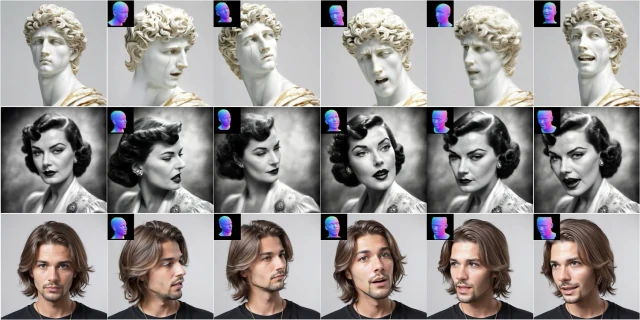
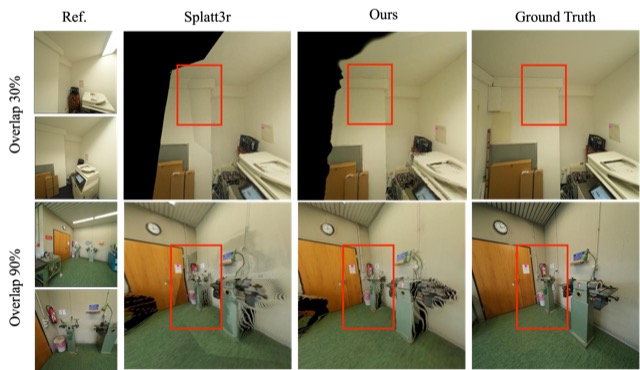
CSG-Fusion: Consistent Sparse-View Gaussian Splatting via Matching-based Fusion

LiteTracker: Leveraging Temporal Causality for Accurate Low-latency Tissue Tracking

Open Source Contributions

GPU attention kernels that accelerate exact attention while reducing memory use.
Contributions: SM100 attention scheduling, asymmetric backward correctness, and NaN-safe KV-cache loads.
Selected PRs
Cache-safe attention forward
-
Sequence-bound nonpaged V-cache TMA loads and zero-fill unused rows to prevent NaN contamination. B200: 146 GPU regressions and memory checks pass; valid-value NaNs and paged KV retain their contracts.
Cache locality and launch geometry
-
Adapt co-authored CLC L2 swizzling while preserving STATIC 2CTA. B200 BF16 causal, 180 1CTA/CLC shapes: 1.039× geomean speedup; 42 shapes regress.
Asymmetric-head backward correctness
-
Separate dV TMEM/SMEM staging widths from Q/K for asymmetric head dimensions. Targeted MHA/GQA gradient regressions cover silent backward errors.

An inference and post-training framework for accelerating video generation.
Contributions: Fused Triton layout transforms, Wan-VACE model integration, and SM100 attention quantization kernels.
Selected PRs
Fused sparse-attention data movement
-
Fuse VSA64 scatter and layout transforms into one Triton kernel. Wan2.1-VSA-T2V-14B, 50 steps, 1/2 B200s: 1.155×/1.145× speedup with bitwise-equal tested outputs (SM100 BF16, D128, tile64; inference only).
Sequence-parallel control streams
-
Shard Wan-VACE 1.3B/14B image, video, and mask control streams across sequence-parallel ranks. Teacher-forced checks compare against Diffusers; FP32 SP2 uses 1e-5 tolerance. BF16 parallel outputs are not bitwise-equivalent.
Long-sequence attention tiling
-
Optimize Attn-QAT full-tile/masked-tail loops and 64×128 backward tiling. Fixed-batch Wan2.1-1.3B SP2, two B200s: forward/backward/AdamW step latency falls 10.9%, preserving tested outputs and gradients bit-for-bit.

An inference and serving framework for large language, vision-language, and diffusion models.
Contributions: Native diffusion model integration, sequence-parallel numerical consistency, and CFG-aware cache lifecycles.
Selected PRs
Native diffusion execution
-
Native Ovis-Image 7B execution with checkpoint mapping, CFG, and TP/SP. Single-B200 exact-tier output matches pinned Diffusers bit-for-bit; four-B200 replay is validated within BF16 control error.
Sharded attention consistency
-
Pad exact-tier SDPA queries to align TP/Ulysses head-shard reduction paths. Operator and two-B200 checks are bit-identical; whole-model differences remain. Default lossless-tier behavior is unchanged.
Request-local cache state
-
Isolate TeaCache CFG branches and reset cached steps and residuals per request. Reused Wan instances match fresh execution bit-for-bit on 1/2 B200s under serial/parallel CFG.

A distributed inference engine that scales diffusion transformers across multiple GPUs.
Contributions: Wan tensor-layout optimization, sequence-parallel numerical consistency, and distributed VAE coordination.
Selected PRs
Contiguous patch-embedding layouts
-
Restore contiguous Wan patch embeddings for cuDNN execution. Wan1.3B BF16, 480×832, 81 frames, 50 steps: two-B200 Ulysses/Ring median latency −6.3%/−7.0%, with bit-identical outputs.
Valid-token attention boundaries
-
Propagate valid-token bounds through padded sequence shards and joint attention, guarding unsupported layouts. Eight-B200-node tests match selected ZImage/Cosmos3/QwenImage/LingBot references exactly; FLUX2 retains a small replay error.
Distributed execution ownership
-
Give prompt sharding, output gathering, and parallel VAE decoding explicit ownership. An eight-B200 DP/Ulysses/CFG matrix verifies missing/duplicated-output fixes and coordinated VAE collectives.

A diffusion model engine for image, video, and audio generation, with support for inference and training.
Contributions: Memory-efficient tiled Qwen-Image VAE encoding and decoding for high-resolution generation.
Selected PRs
Memory-efficient VAE execution
-
Blend overlapping QwenImageVAE tiles for memory-efficient encoding and decoding. One B200, 2048² BF16, tile/stride 128/64: isolated encode/decode peaks 7.77/8.53 → 2.15/2.43 GiB; tiled outputs differ slightly.

A serving framework for multimodal generation across text, images, audio, and video.
Contributions: CFG-aware TeaCache isolation and request-failure recovery for diffusion serving.
Selected PRs
Guidance-aware cache ownership
-
Separate conditional/unconditional TeaCache state through shared CFG contexts. Regressions cover branch-local updates and fallback without an initialized distributed group.
Request failure recovery
-
Isolate failed requests and clean up partially submitted batches. GPU regressions preserve engine reuse for later requests, covering list and generator inputs.

RL post-training infrastructure with deterministic operators for consistent computation across training and rollout engines.
Contributions: Deterministic attention and memory-efficient log-probability kernels, plus TP/EP rollout–recompute parity.
Selected PRs
Batch-invariant attention kernels
-
Fixed-order Triton H3 attention without atomics or split-KV. One H100, BF16 non-causal forward/backward: batch/head invariant, up to 48× vs strict deterministic reference at 8,349 tokens; still 1.6–2.3× slower than SDPA.
Rollout/recompute reproducibility
TP4 validation → EP4 extension
-
Map Qwen3-Next TP4 weights across vLLM rollout and Megatron recompute. Four B200s, EP1: 64 replay cells validate bitwise parity through two updates and checkpoint reload.
-
Extend TP4 replay to EP4 with fixed-order expert routing. One four-B200 node: 16/16 rollout/recompute and 97/97 batch-invariance cases pass; EP4 training and checkpoint export stay disabled.
Bounded-memory log-probability backward
-
Fuse direct-write logp gradients with a bounded chunked fallback. One B200, BF16 32768×151936 logits: peak memory 46.37 → 9.27 GiB including gradients; some tuned cross-entropy alternatives are faster.

A modular diffusion library for image, video, and audio generation.
Contributions: CFG-aware cache integration and request-lifecycle validation for Wan video-to-video pipelines.
Selected PRs
Branch-aware video caching
-
Separate Wan V2V CFG cache contexts for TaylorSeer, FirstBlockCache, and MagCache. One-B200 Wan1.3B smoke tests verify cache-off parity and request reset; speed and generation quality are unqualified.
Experiences


Video World Model for Robot Dexterous Manipulation
- Developing a cross-embodiment video generation method that translates egocentric human demonstrations into robot-domain videos for downstream policy learning.

Human Motion Video Diffusion
- Developing a camera-controlled video diffusion model for controllable synthesis of human motion and scene interactions across changing viewpoints.
Human Head Avatar Animation
- Led the development of ViDS, an identity-preserving video diffusion method for long-form portrait animation.
- ViDS ranked first on 8 of 13 VFHQ metrics, improving reenactment quality and identity preservation.


Dense Point Tracking
- Implemented LiteTracker’s online inference and EMA-flow initialization, and conducted low-latency tracking experiments.
- LiteTracker remained competitive on STIR and SuPer while running ~7× faster than its predecessor and 2× faster than prior state of the art.


3D Scene Decomposition
- Designed and evaluated CSG-Fusion; received Best Paper at ICCV Workshop E2E3D.
- Improved ScanNet++ PSNR by 2.8 dB over Splatt3R at 90% overlap with ~124K fewer Gaussians, and demonstrated zero-shot generalization on DTU.

Large Scale 3D Scene Reconstruction
- Contributed to the development and experimental evaluation of a large-scale 3D scene reconstruction pipeline.
Blog
Thoughts on research, 3D, video generation, and the occasional in-between.
Latest posts are available on the blog page.
Projects



LiteAvatar - WASM Version
A lightweight audio-driven 2D avatar solution that runs entirely in the browser using WASM based on Lite-avatar. No backend server required.
Gallery


Interactive Thermal Receipt Simulation
Receipt Deformation Simulation

Duck Pool: Interactive Water Simulation
Dive into an interactive water simulation where ducks float, collide, and create ripples.
Gallery